
10 Common Mistakes Students Make When Choosing a Country to Study Abroad
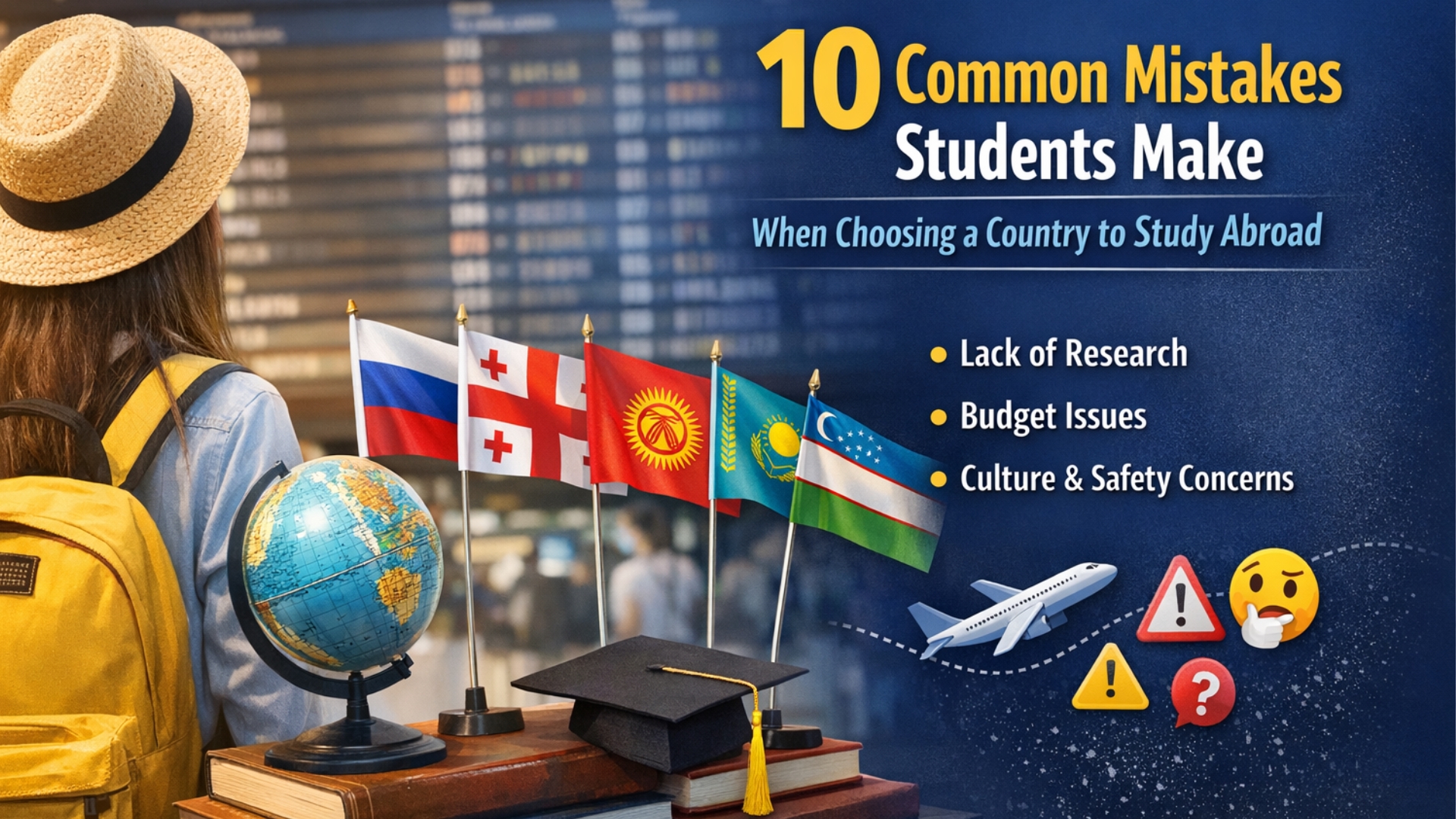
Studying abroad is a dream for many students, but choosing the right country can be overwhelming. Every year, students make critical mistakes that lead to wasted time, money, or missed opportunities. At SREC (Sai Ram Education Consultants), we guide students to make informed decisions about studying abroad.
Common Mistakes to Avoid
Here's a list of the 10 most common mistakes students make when deciding on a country to pursue higher education and how to avoid them.
Many students choose a country just because it's "popular" or because it has well-known universities.
Tuition fees are only part of the expense. Cost of living, accommodation, food, transport, and other daily expenses matter too.
Some students pick a country without considering the local language of instruction or daily communication.
Not all foreign degrees are recognized in India or internationally.
Each country has different student visa regulations, work permissions, and post-study work options.
Students often ignore local safety conditions, healthcare access, or insurance requirements.
Many students choose a country because "friends are going there" or it's trendy.
Some countries offer great education but limited practical exposure or post-study job opportunities.
Culture shock is real. Students may struggle with local customs, climate, or food habits.
While tuition is important, choosing a country solely based on low fees can backfire.
Final Thoughts
Choosing the right country to study abroad is more than picking the cheapest or trendiest option. Students must consider course recognition, safety, cost, cultural fit, and career opportunities.
Note: Study abroad requirements and opportunities vary by country and institution. For personalized guidance based on your specific academic profile and career goals, consult with SREC experts.