

NEET UG 2026 – Expected Cut-Offs, Seat Matrix & Counselling Strategy
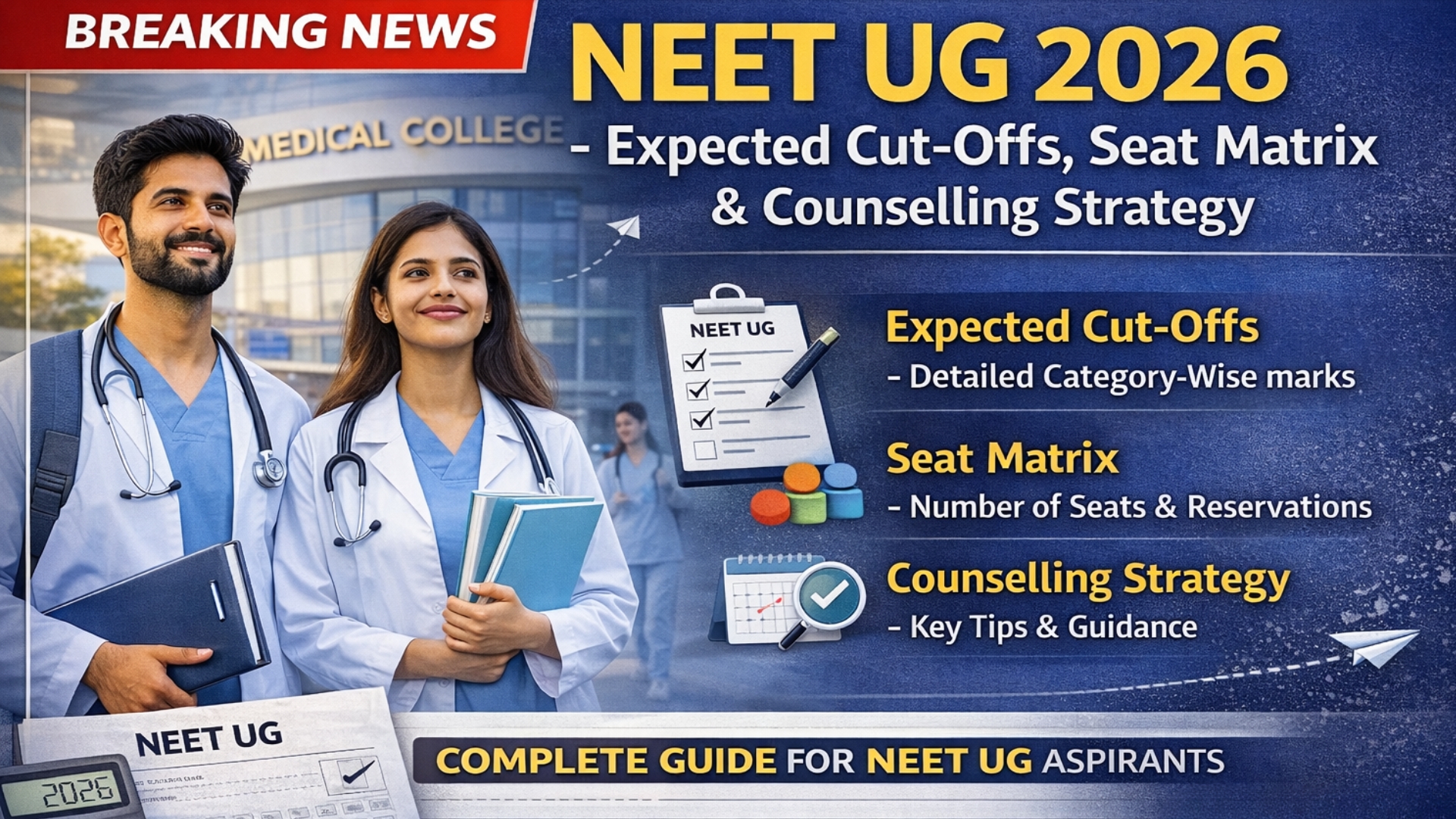
NEET UG 2026 is expected to be one of the most competitive medical entrance examinations in India. Every year, the number of aspirants increases while the availability of MBBS seats grows at a much slower pace. With over 20 lakh students competing for approximately one lakh MBBS seats, success in NEET UG depends not only on academic performance but also on awareness and strategic planning.
Expected Cut-Off Trends for NEET UG 2026
The qualifying percentile for NEET UG is expected to remain unchanged—50th percentile for General category and lower percentiles for reserved categories. However, actual admission cut-offs for government medical colleges are significantly higher. In top states, even a score above 600 may not guarantee a government seat for the General category. Cut-offs vary widely based on state quota, category, and college preference.
Understanding the Seat Matrix
India's medical seat matrix includes government colleges, private colleges, deemed universities, central universities, and AIIMS-like institutions. Government colleges offer subsidized education and high patient exposure but have very limited seats. Private and deemed universities offer more seats but at significantly higher fees.
- Government Colleges: Subsidized fees but limited seats
- Private Colleges: More seats but higher fees
- Deemed Universities: Specialized institutions with separate counselling
- Central Universities: Limited seats across India
- AIIMS & JIPMER: Separate entrance exams and counselling
Counselling Strategy That Works
A strong counselling strategy involves realistic preference filling. Aspirants should shortlist colleges based on previous year rank ranges rather than aspirational choices alone. Including backup options is essential. Participation in all counselling rounds—Round 1, Round 2, mop-up, and stray vacancy rounds—significantly increases the chance of securing a seat.
Key counselling strategy elements:
- Realistic college shortlisting based on previous year ranks
- Participation in ALL counselling rounds
- Proper documentation prepared in advance
- Financial arrangements for both government and private options
- Backup options for every preferred choice
Final Thoughts
NEET UG is not just an exam but a process that extends beyond results. Students who prepare strategically for counselling alongside exam preparation often outperform those who rely solely on marks. Informed planning, early research, and expert guidance can make all the difference.
Note: This article is based on trends from previous years and expected patterns for NEET UG 2026. Actual cut-offs and seat matrix may vary based on official announcements.